
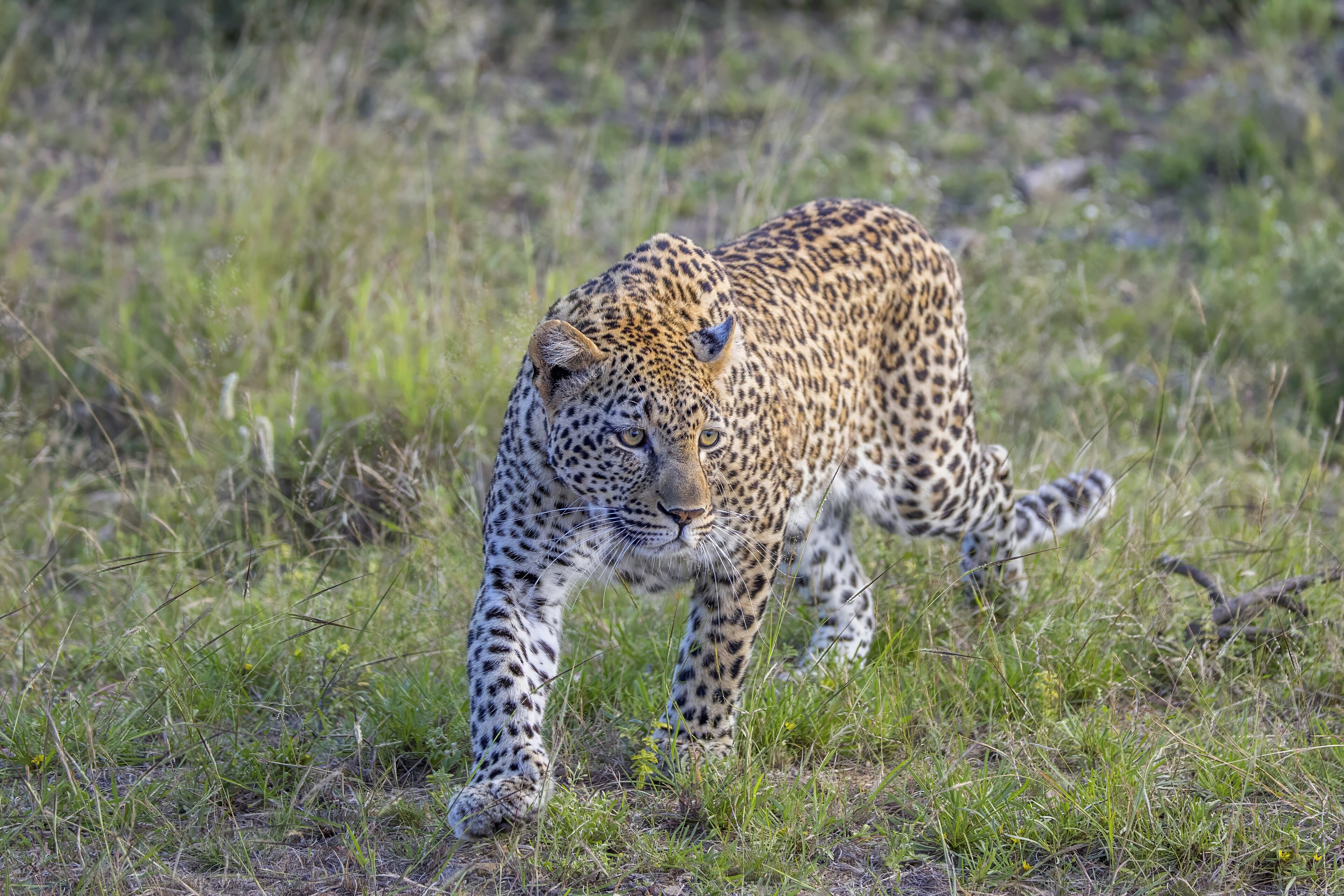
How to identify african leopard
- Open rosettes rather than solid spots
- Long tail and strong shoulders
- Pale belly with dark spots
Do not identify from one clue alone.
Distance, age, sex, season and light can change an animal’s appearance. Combine several visible features and keep “not sure” as a valid answer.
Behaviour and habitat
What you may notice
Usually solitary outside mating or a mother with cubs
What you may notice
Often uses cover and may rest in trees
What you may notice
Can be active by day or night
Where it fits
Woodland, riverine cover, rocky country and savanna with concealment.
What can it be confused with?
Cheetahs are slimmer, have solid spots and dark tear marks from eye to mouth. Leopards have rosettes and a heavier build.
View it responsibly
Avoid crowding the animal or blocking its cover. A short, calm view is better than forcing a retreat.
Location protection applies.
Wild This Way withholds or generalises sensitive wildlife positions. Never add a road number, landmark or exact pin to a public post.