
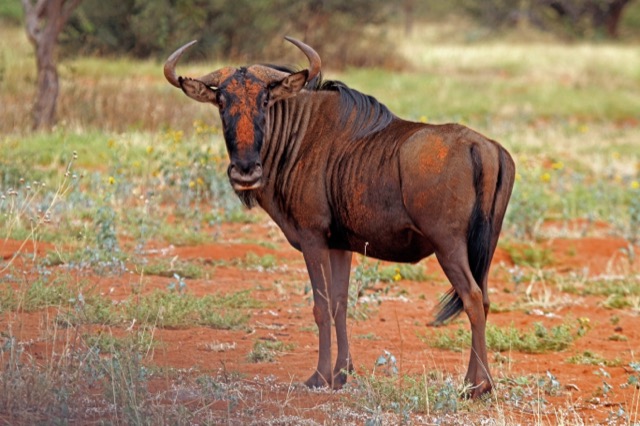
How to identify black wildebeest
- Dark brown coat
- Long cream-white tail
- Horns curve down and forward before turning up
Do not identify from one clue alone.
Distance, age, sex, season and light can change an animal’s appearance. Combine several visible features and keep “not sure” as a valid answer.
Behaviour and habitat
What you may notice
Forms herds on open grassland
What you may notice
May bunch tightly when alert
What you may notice
Bulls can defend territories during breeding
Where it fits
Open highveld grassland and managed grassland reserves.
What can it be confused with?
Blue wildebeest have a dark tail, blue-grey coat and darker vertical bands across the shoulders.
View it responsibly
Use binoculars for the horn and tail check; never pressure a herd into running simply to obtain a clearer photograph.